INTERNSHIP FIELD TRIP OF ELECTRO-MECHANICAL ENGINEERING STUDENTS TO MONG DUONG 1 THERMAL POWER PLANT, CAM PHA CITY, QUANG NINH PROVINCE
At present, the training of engineers and bachelor’s degree holders at Hanoi University of Civil Engineering meets social needs, with education closely linked to real-world production practice. Alongside classroom learning, field trips and internships help students mature and create career opportunities after graduation.
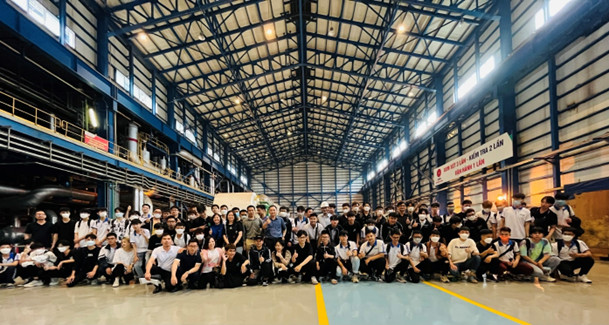
In recent years, the Electrical Engineering Division of the Faculty of Mechanical Engineering at Hanoi University of Civil Engineering has regularly organized field trips and internships for Electro-Mechanical Engineering students at production facilities across northern provinces and cities. On May 22, 2022, the Division organized a study visit and practical experience trip for classes in the Electro-Mechanical Engineering program to Mong Duong 1 Thermal Power Plant, under Mong Duong Thermal Power Company, in Cam Pha City, Quang Ninh Province.
Mong Duong 1 Thermal Power Plant has two generating units with a total installed capacity of 1,080 MW. On average, the plant supplies about 6.5 billion kWh to the national power system each year. This is a modern plant using Circulating Fluidized Bed Boiler (CFB) technology—one of the most advanced technologies in the world today. It can burn lower-quality coal and has a wide fuel range, using anthracite coal from major coal mines in Quang Ninh.
For flue gas treatment, the plant uses limestone co-firing with coal for desulfurization, combined with an electrostatic precipitator (ESP) dust filtration system. The plant has also invested in separate treatment systems for domestic wastewater and industrial wastewater, ensuring the effluent quality meets current environmental standards. Plant operations are largely automated. Emission monitoring and supervision systems are installed with advanced automatic sensors.
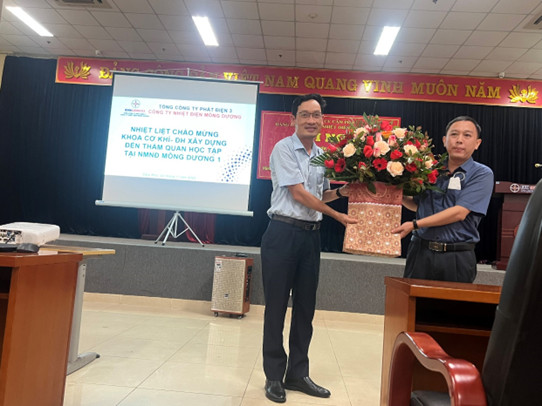
The delegation included nearly 80 students along with lecturers from the Electrical Engineering Division, led by Dr. Nguyen Duc Bac as head of the delegation. Welcoming the delegation at the plant were Mr. Tran Dang Toan—Deputy Director of Mong Duong 1 Thermal Power Company; Mr. Nguyen Tien Hieu—Deputy Foreman of the Operations Workshop; Ms. Nguyen Thi Lan Anh—Specialist of the Administration–Labor Department and Vice Chair of the Company’s Trade Union; and Mr. Nguyen Van Thinh—Specialist from the Safety and Environment Department.
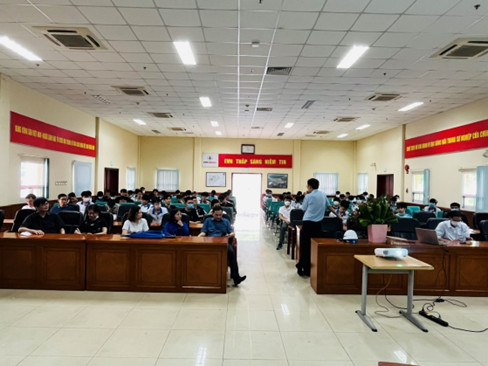
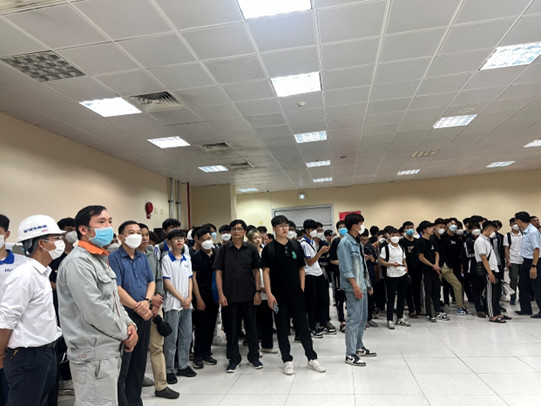
At the plant’s auditorium, Mr. Tran Dang Toan introduced the plant’s construction process beginning in 2011. In 2015, Unit 1 with a capacity of 540 MW of Mong Duong 1 Thermal Power Plant was successfully synchronized to the national grid, and to date both units have been in commercial operation.
On behalf of the lecturers and students, Dr. Nguyen Duc Bac thanked the Board of Directors and plant staff for the warm and respectful reception of Hanoi University of Civil Engineering’s study delegation. He expressed a desire for long-term cooperation and hoped that the university’s future engineers would one day join the workforce producing electricity for the country.
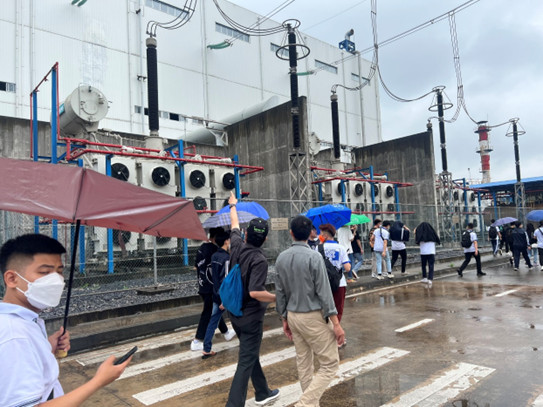
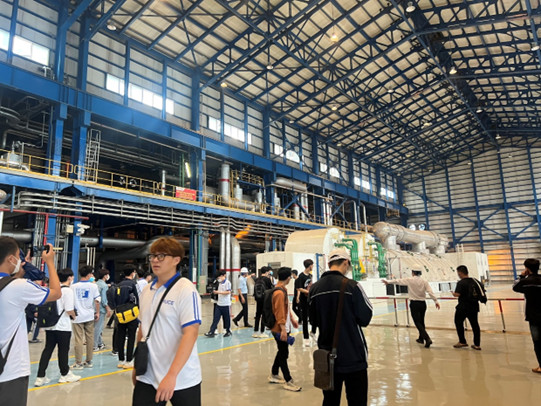
Mr. Toan and his colleagues then led the delegation to visit the 500 kV output substation connecting the generated power to the national grid. At a workshop where the turbine–generator unit is installed on an upper level of the plant, students were able to see for the first time generators operating with very low noise and fully automated processes.
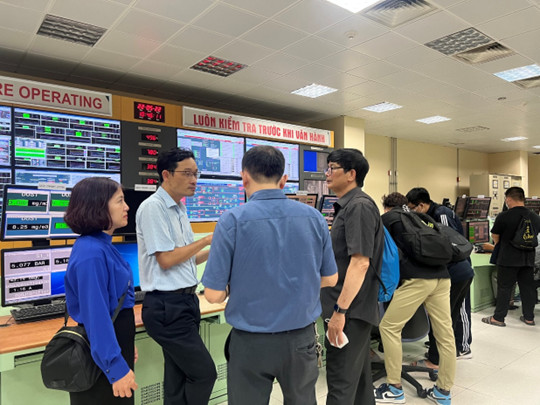
Guiding the delegation into the central control room, Mr. Toan noted that the engineers and technicians work very professionally and responsibly. This is considered the “brain” of Mong Duong 1 Thermal Power Plant, responsible for commanding, monitoring, and operating the entire production process 24/7. In the central control room, the delegation observed plant engineers operating, monitoring, and controlling activities at the plant, including coal transportation sites dozens of kilometers away, and coordinating with the National Power System Dispatch Center (A0) and the Northern Power System Center (A1), etc. This ensures both units, boiler systems, and all components operate safely and efficiently, meeting requirements for commercial power generation supplied to the national power system.
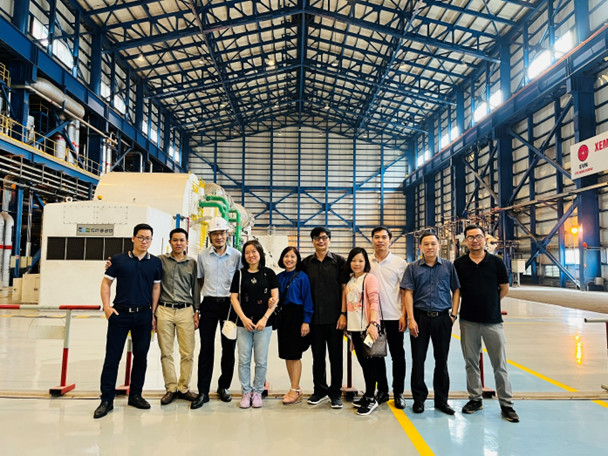
To conclude the visit, the lecturers thanked the plant staff for their thoughtful and enthusiastic hospitality and emphasized that although the trip was short, it provided valuable experiences and work-related insights, helping students build confidence and improve their learning.
Some photos from the study visit to Mong Duong 1 Thermal Power Plant

 /
/



 19/09/2026