BACHELOR PROGRAMME IN MECHANICAL ENGINEERING
Specialization: Construction Machinery Engineering
1. General Introduction to the Construction Machinery Specialization
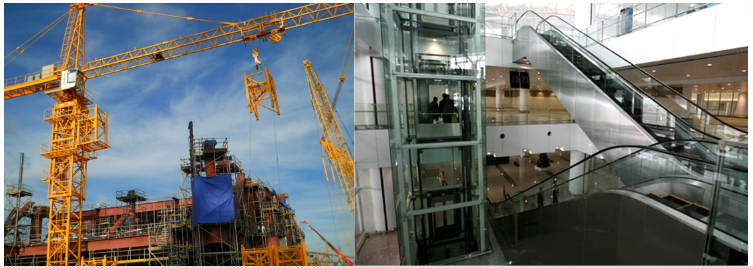
The Construction Machinery Engineering Programme provides training in the design, manufacturing, and management of equipment systems used in construction and industrial production. After graduation, students are qualified to work as design engineers, production management engineers, construction mechanization engineers, machinery inspection engineers, as well as technical consultants and business professionals in the mechanical and construction industries.
The development of the Construction Machinery specialization is closely linked with the establishment of the Faculty of Mechanical Engineering at the Hanoi University of Civil Engineering (HUCE), formerly known as the Faculty of Construction Machinery. The programme originated in 1960 (Cohort 5) at the Hanoi University of Science and Technology (HUST), prior to the separation and establishment of HUCE as an independent university.
Since its inception, the programme has produced more than 60 cohorts of full-time engineers, along with part-time, master’s, and doctoral graduates. Graduates from the Construction Machinery specialization have successfully contributed to various sectors of the national economy, including industry, infrastructure, and national defense, by effectively applying their knowledge and technical expertise in practice.
2. Programme Educational Objectives (PEOs) and Programme Learning Outcomes (PLOs)
2.1. Programme Educational Objectives (PEOs)
The Construction Machinery Engineering Specialization aims to educate mechanical engineers who possess a strong foundation in engineering and technology, with specialized competencies in construction machinery and equipment. The programme’s educational objectives are as follows:
PEO1: To provide graduates with solid knowledge in engineering and technology, enabling them to identify and solve technical and operational problems related to mechanical systems, with specialization in construction machinery and equipment.
PEO2: To develop the ability to design, develop, and improve mechanical systems, components, and products—particularly construction machinery—while considering economic, social, and environmental factors in the context of globalization.
PEO3: To enhance communication, teamwork, and leadership skills in multidisciplinary and international engineering environments, with effective use of technical graphics, language, and professional English.
PEO4: To cultivate research, innovation, and management capabilities for technological development and entrepreneurship, enabling graduates to adapt to the evolving economic, social, and environmental conditions of the nation.
2.2 Programme Learning Outcomes (PLOs)
Upon completion of the Construction Machinery Engineering Programme, graduates will be able to:
PLO 1.
Understand and solve problems in the field of mechanical engineering, with specialization in construction machinery and equipment, by applying principles of mathematics, science, and engineering.
PLO 2.
Apply engineering design principles to develop solutions, products, and systems that address technical problems while ensuring safety and considering business, social, and international contexts.
PLO 3.
Communicate effectively in oral, written, graphical, and technical English forms within engineering and interdisciplinary environments; work efficiently in technical teams and demonstrate leadership when required.
PLO 4.
Recognize and fulfill professional and ethical responsibilities in the practice of mechanical engineering.
PLO 5.
Understand and apply experimental and practical research methods in engineering.
PLO 6.
Employ appropriate learning strategies to acquire and apply emerging technologies in the field of mechanical engineering.
3. Career Opportunities
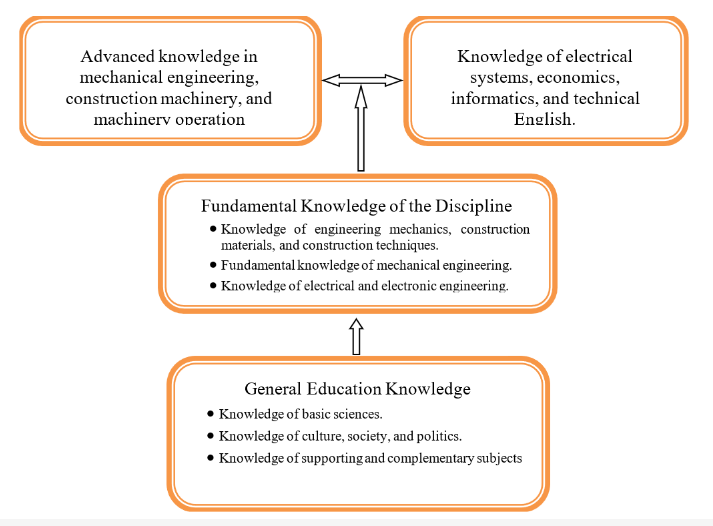
The Construction Machinery Engineering Programme provides students with a strong foundation in mechanical engineering and interdisciplinary technical knowledge in areas such as electrical engineering, construction, and economics. Graduates are equipped to take on a wide range of professional roles in both the industrial and construction sectors, including:
Design, manufacturing, and assembly of mechanical equipment and electro-mechanical systems used in industrial production and construction.
Management, operation, maintenance, and repair of machinery and equipment in industrial production systems and construction technology projects.
Business operations and technical inspection of machinery and equipment.
Construction mechanization, investment planning, and procurement of machinery and equipment for construction projects.
Participation in the international labor market as technical engineers or research officers in global enterprises and institutions.
Research and teaching positions at universities, colleges, research institutes, and other organizations both domestically and abroad.

 /
/


46
 06/11/2025
60
20/11/2022
54
20/11/2022


